Sunday, April 16, 2017

Theresians (2016-2017)

It's been a month since we graduated from this great institution. We survived the 5 grueling years of formation, and we thank our Lord and St. Therese for keeping us motivated and strong to overcome these trials we encounter inside the seminary everyday. Some of our comrades who left seminary earlier than us came to witness this memorable event and congratulated us for a job well done.

I know some of us graduates here will not proceed to Theology in their own will or are advised to take the regency program for a time period by their superiors, but we will never forget the memories of love and hope in our 5 years of seminary formation. May St. Therese be our everyday companion wherever we are.

This is also dedicated to Rev. Fr. Hover F. Jocson, DCD ( + ), our first formator and our beloved spiritual father.


Wednesday, March 8, 2017

Rev. Fr. Hover F. Jocson, DCD ( + )


Born: 07 May 1965
Ordained Priest: 20 April 1994
Died: 28 January 2017

Thank you for being a good example to us seminarians and for helping us in times of our spiritual need. We hope by our prayers and good works may you enjoy the eternal reward God is preparing for you there in His Kingdom. 


{From the people of Seminarians' Musings and seminarians of Batch 2017 from St. Francis Xavier College Seminary.}

Friday, March 3, 2017

“Forgiveness is caring; caring is loving”


(Edited/summarized version of the sharing given at the family Vigil for the late Arnold Sator, March 4. 2017)

My dear brothers and sisters, my dear family members of both Castillo and Sator Families, good evening to all!

Many have already noticed Papa Bebot/Uncle Arnold’s coffin did not have names on it (as we usually do), but a single quote: “Forgiveness is caring, caring is loving”. Tonight this sharing will center on this quote and on the light of the readings we have chosen for tonight’s vigil.

First, we will try to dissect this quote according to three important points: forgiveness, caring and loving. Forgiveness is essentially letting go and forgetting the pain caused by our faults and instead building communion with those whom we have hurt. Forgiveness is when we realize that we too are human, commit mistakes, and harm each other in the process. Forgiveness is our painful yet liberating struggle to restore or even to increase friendship and love where it was lost by sin. To forgive is not really and innately human (as we would want to get things even) but it is a gift of God: forgiveness is essentially divine, something that is a result of God’s grace. When we forgive, we reflect the image of God. Where forgiveness reigns, there God dwells.

Caring, on the other hand, is to put oneself at the other and to nourish the other with what he has and what he can still give. Caring is there when we cherish each other not because of what they are and what they are not for us, but because of who we are. It is unmerited in nature: we care for those people whom God has sent to us. Caring is manifested in our wholehearted service to others and to our unselfish and undivided love towards our family. And yes, when we care, we reflect the image of God. Where caring is present, there God dwells.

Loving, above all, is to will the good of the other. Love is to give one’s life at the service of the other. Love is to give care, forgiveness and attention to the ones that we love: it is not momentary or emotionally-based but it is a choice that we make each day- to give all that we can and all that are for the growth and success of the ones that we love. Young people, we always have to remember that love is real when it hurts: it means that pain is always a part of love, an authentic love that gives life. Where there is love, God abides in us. Where there is love, there is the presence of God.

If we are to even shorten this quote (the last words of Papa Bebot), it would simply appear as one word: LOVE. Love is the one that keeps us as a family: it is not really the common lineage that binds us, but the love that we have for each other. When we love, care and forgive, we are family. In a sense, all of us gathered here tonight are gathered for love: the love that we feel for Arnold and for each other as companions on the journey. And in this night of mourning, remembrance and hope, God is here!

My dear brothers and sisters, isn’t it the example that was shown to us by Uncle Arnold/Papa Bebot? Isn’t his last sickness an integrated manifestation of these three? Have we seen the presence of God, the share in the Passion of Christ, as manifested in his weak body that suffered for 40 short and fast days? Have we seen the words of God come alive to us in these simple words of Uncle Arnold/Papa Bebot? (Here, while I was browsing my cellphone, I was asked by Yangi and Ate Bem-bem if I can provide a Bible passage to cap whatever feelings we had now: I simply said no because the quote was already enough and more forceful than any Bible message in bringing to life what life and love were all about for him)

The challenge for all of us is to mirror (panalaminan) what he has done for us, so that his dying will not be in vain. His life was short, but indeed, it was meaningful for all of us. In one way or another we have experienced his care and his love, even with our shortcomings and failings, even if at times we do not feel that we deserve his love. Isn’t it the time to mirror what he has done for us, to be a reflection of “Bebot/Arnold” in our life as a family? Isn’t it the time that we begin to become more like God, in loving imitation of Jesus Christ, as expressed in the life of Uncle Arnold/Papa Bebot?

Indeed, when we love, what can separate us from each other? (as the First Reading tells us) Can problems separate us? Can our personal wrongs and misdeeds do so? Can anything else separate us from each other? No. Indeed, when we love with Christ’s love, death is not a distance nor a goodbye, but a passing from life to Life itself. In eternal life, love takes its full completion and meaning.

In this Vigil, we pray primarily that his soul will reach eternal joy with God. We ask God not to look primarily on his sins, but on the love and faith he had offered to Him in this life, and the forgiveness and care he has shown to all of us. We pray that the peace that was promised by Christ to those who love Him be granted to him.  And in some way too, we pray for ourselves, that we can become more loving, caring and forgiving like Christ Jesus, as shown to us by Uncle Arnold/Papa Bebot.


As we continue this Vigil, and in praying for the eternal repose of the soul of Arnold, may we be people who in our care, forgiveness and dedication for others, bear witness to that love that gives life, to that love that goes beyond death, to that love which is God’s nature and character- manifested in life of Christ Jesus, his Son, our Lord. Amen.

Monday, February 6, 2017

Deliver us from every evil

"Deliver us, Lord, from every evil, and grant us peace in our day."


In daily and Sunday Masses we never cease to hear these words after reciting or singing the Lord's Prayer on the Communion Rite.  This mere part of our Catholic ritual gives us the sense of comfort and assurance that the Lord will deliver us from any tribulation, temptation and suffering we face in our earthly journey. That the Lord in the Holy Sacrifice of the Mass would heal our wounds and turn us into His good sons and daughters working together to get to the Kingdom of Heaven.

My dear readers, I know this might shock you, for some of you might have thought that these seminarians are like angels, acting in a reserved way and dressed impeccably in their clerical shirt, slacks and in their polished leather shoes. You thought that the seminary is simply a holy place where you can meditate the greatness of the Lord in silence and in harmony with the creatures. Well you are wrong. Definitely wrong.

For some seminarians, the Seminary is literally 'hell on earth'. Seminarians coming from different backgrounds come together and boast to each other of who they are and what they have, and the aloof and weak ones are always being tripped, humiliated and bullied. They tease, annoy and even insult a seminarian just for fun. They even do some physical acts of bullying their companion: for example, there was a time when a group of seminarians threw urine at their companions' desks out of rage while the rest were gathered for night prayer.

There is this advice given to us by those who were ahead of us in the formation that 'a seminarian must blend with the crowd in their interests and the like.' If you show anything that makes you aloof within the community, you really need to pray a lot for they will make you an object of their entertainment. You will suffer much humiliation and undergo a sort of 'crisis' in which you clearly doubt your vocation over a community that made your stay in the halls of the seminary like a load of crap.

Now what were the reasons why do some seminarians tend to make fun of their companion's defects and aloofness? First is boredom. For those who weren't used to discipline and silence, they try to find things that can entertain them and that includes calling them names or making unnecessary noises when their companion is given a chance to speak. Some are quite sensitive or even paranoid when they were called names. Another thing is their inability to express their inner thoughts and feelings on their formation. They sometimes get physical just in order to send a message to their companions that this seminarian needs your help. Another is that they are trying to fill the empty space as a person, by their insecurity they wanted to make others suffer and feel insecure too through their actions.

Now this does not mean that those who were being bullied are vindicated. They are not also free from suspicion. Maybe this bullied seminarian was a know-it-all asshole who annoyed their companions of his antics and even drove them crazy. Or maybe this seminarian is too hesitant to express his feelings and or reluctant to share things about his life, and that leads into misunderstanding. Another thing is that maybe the seminarian has personal issues that might affect his dealings with his community and might affect the formation process he has undergone into.

In the seminary, there is no such thing as 'be yourself.' You are trained to become a priest. You are trained to preach, mingle and talk to the faithful of different groups and backgrounds and to become a leader, taking responsibility as a pastor and shepherd of the multitude. You are not there to become more narcissistic. You are not there to become more of an introvert. You are not there to do your own way. You are there to be trained a priest, a person who was transcended by the grace of God to bring the people back to Him, whether you like it or not.

Creating safe-spaces for those who were victims of bullying are not applicable in the seminary formation. We do not train sissies; we train God's warriors who are not supposed to be cowards when preaching the Truth that guarantees eternal life to those who listen and keep it into their hearts and minds. If we train sissies then the Church would simply cease to exist. Rather, these victims should assert themselves; either use their rational capabilities or simply use force. That should help realize the bullies that they are wrong in all sorts and force them to recognize that the world they live in is not merely entertainment. It is also a struggle of suffering and pain due to their emptiness inside. In that way, in the emptiness of their hearts and minds they can help each other solve their own problems, address their personal issues and help each other become good and holy priests.

I think this picture sums everything that I've said here.


Friday, May 6, 2016

Catholic vote

Election campaign is getting heated these days with lots of mud thrown at each opponent. No time is wasted for candidates questioning the morals held by each opponents. This candidate is a womanizer, this candidate has secret bank accounts in Swiss banks and this candidate promises to kill everyone who violates the law. People get easily affected with these rumors, and they tend to switch sides and vote for a candidate who is less immoral. Suppose that all candidates have a dirty past and still doing vices. This will result into a crisis and in the end people will not vote. 

It also invites us to think on what the Church has done to teach good morals to people for half a millennium.They have spent millions of pesos given by donors and lots of energy to form Catholics into good Christians and patriotic citizens of the State and yet they seem to lose this never-ending battle with evil. 

Honestly I cringe to see some devout Catholics raising up the importance of a "Catholic vote" wherein Catholics must vote for a leader who is a devout Catholic with a strict upbringing that would put the interests of the Catholic Church first in State matters. Church teaching must be adhered by all secular institutions so as to realize the reign of Christ the King in the State and in the Universe. The question is, does the "Catholic vote" really exist?

Technically not. 

Well here are the reasons why it does not exist:

 - We live in a society where authority loses its power and influence to command people to follow their precepts. Millennials either believe in God but doesn't identify with any organized religion or do not believe God at all. If a religious leader reacts against a candidate who is known to commit a mortal sin, he is accused of being a hypocrite and raise up issues like "clerical corruption" particularly sex abuse cases committed by priests and clerics as form of blackmail.  

- Catholics are now divided on who they should vote as president. Unlike the Iglesia ni Cristo who commands her followers to vote according to the choice of their elders, the episcopal conference encouraged Catholics to vote according to their 'conscience.' They must vote on what their 'conscience' and reason say that it is right. 

The lay-run Catholic Faith Defenders, who profess themselves as "orthodox Catholics loyal to the Pope and ready to defend Church doctrine from enemy attacks", are now divided on the choice of their candidates. Most of them support Duterte and some of them do not agree with what Duterte says. It badly damaged the image of the Church as a 'non-partisan organization' because it implies that bishops are now commanding their flock not to vote for this guy as what some 'apologists' think.

- We do not have a strong and influential political party whose ideology is based on Catholic social teaching and conservative ideals (not American neoconservative ideals) that give importance of human life, tradition, family and a Catholic State. We have the Ang Kapatiran Party and Pro-Life Partylist, but they are not big and influential unlike the Nacionalista Party, Liberal Party and other political parties in the Philippines. Besides, our political system is only based on getting peoples' sympathy and support sans political ideological spectrum. We easily fool people of promising an 'earthly utopia' in just few years.

Whoever wins the national elections, it is a great opportunity for us Catholics and us Catholic seminarians to assert our spiritual influence towards the masses by creating a social movement, a movement that put the interest of the family, tradition, the Faith and also the State and a movement that recognizes its human faults yet strive to become holy Christians. Enough of voting for candidates who keep on promising to make laws that respect human life yet very incompetent and corrupt. We must establish a new order, an order where Jesus Christ is Head of the State that is not subservient to any corrupt political power.  


Thursday, April 28, 2016

Mercy: God’s Gift, Our Mission

(Editor's Note: This article was submitted to the Touchstone- the official student publication of the St. Francis Xavier College Seminary. It was later published in a simplified form. We publish the original script used by the author. Enjoy!)

As defined by the Angelic Doctor, St Thomas Aquinas, mercy in the human perspective is the compassion we have for another’s distress, driving us to do anything to help the other (Summa Theologiae, II-II.30.1). We are inclined to feel compassion for others because we can connect with their pain: we are just frail creatures who cannot do much. On the other hand, mercy in God’s perspective is his compassion for our frailty that drives Him to do everything- going beyond sin and punishment- so that he can pour out his abundant love on us. In this sense, mercy can be considered another name for love, and even of God himself. This reflection will speak of these two facets in the light of Church teaching and the experiences of some seminarians, while at the same time challenging us to enter into these realities using three different contexts of the word “mercy” found in our Filipino culture.

Mercy: God’s Gift for Broken Humanity                
                                                                               
A seminarian arrived late from his day-off. Knowing that this was his first time to be late, he felt scared and worried; their evaluation day was fast approaching and he could be questioned about this. Emotions got the better of him, until he was called by a formator to his office. The formator asked him to sit down, explain why he had been late- and on seeing the worry-stricken face of the seminarian, consoled him and told him not to do it again. The seminarian went away comforted, and was inspired not to violate the Rule because of the compassion of his formator.”
We cannot speak of mercy without pointing out to our human condition: from the moment our first parents erred to the present moment, sin has entered and dominated our lives, leading us into poverty, bloodshed and division. Seeing everything go terribly wrong, man has turned to God, asking for mercy and love to rain from his abode. As a response, the Father of mercies repeatedly made covenants with them, showering them with a mercy that “prevails over the sin and infidelity of his chosen people” (St. John Paul II, Dives in Misericordia, 4).
Not limiting himself to intervening in our history, he sent us in the fullness of time, his Son, Jesus Christ, the “face of the Father’s mercy” (Pope Francis, Misericordiae Vultus, 1).  Jesus proclaimed a “time of favor” and made it manifest in his life and ministry. “Making the Father present as love and mercy is the fundamental touchstone of his mission as the Messiah” (DM, 3). But his greatest act of mercy towards us was to show us His love by offering his Son as a redeeming sacrifice. During his Passion, Jesus became the “Door of Mercy” which opened for the whole world: his wounded body became our way to the Father, his Blood becoming an ocean of mercy which forgives a multitude of sins. And as an everlasting memorial of this redemptive act, Jesus gave his Church the Sacraments of Mercy- Eucharist and Penance- for us to experience that mercy which “overcomes everything, filling the heart with love and bringing consolation through pardon” (MV, 9).
Our approach to this tremendous gift of mercy consists in the first context of mercy in our Filipino culture termed as awa, kalooy or compassion. We must ask for the Father’s mercy to pour down upon us, and receive His infinite love for us revealed in Jesus Christ. We must then let it define our own lives; to heal the wounds caused by sin and evil, to reawaken us to new life and to instill in us the courage to look at the future with hope (MV, 10). “So let us confidently approach the throne of grace to receive mercy and to find grace for timely help” (Heb 4:16).

The Church: Sent to be Merciful like the Father

“A group of seminarians and their friends decided to have a Christmas outing; it never materialized despite their well-organized plans. Instead, they decided to forego it and visit a nearby Home for the Aged; at first out of pure curiosity, but later on simply to thank God for the year’s blessings by helping the elderly. And it so happened that when their funds were pooled together, it was insufficient; so one of them posted on Facebook asking for assistance for their visit. And out of various places, money and goods poured into their hands so that they were able to hold that party successfully. Later on, they reflected that it was a good experience for them to be God’s instruments of care for these people: out of the blessings they received, they gave towards those who need love and support.”
Out of the flowing abundance of God’s mercy, man realizes that his dignity rests in being loved by the merciful Father; his vocation consists of becoming a vessel of mercy for others. The Church, a people chosen by the Lord’s mercy (miserando atque eligendo), received the fullness of grace from the Paschal Mystery and continues the mission of her Lord in becoming a sign of mercy for all.
In order to let the gift of mercy grow and flourish, she asks her children to first receive the Sacraments, especially of Penance and the Eucharist, so that they may conform themselves to the Merciful Jesus. Second, she invites them to become merciful themselves, especially in performing the corporal and spiritual works of mercy- those time-honored exercises she teaches us to become “merciful like the Father” (Lk 6:36).
On this year 2016, the Church offers us a special “time of favor” called the “Extraordinary Jubilee of Mercy” to ponder and reflect on the wonderful mystery of God’s mercy. The various initiatives offered by the Church during this year invite us to open ourselves to God’s mercy, to extend mercy to others- not by discriminating or shunning them, but by opening our arms towards them and leading them to the Father “who desires all men to be saved” (1 Tm 2:4).
As a means of responding to our mission, we now arrive at our second definition of mercy, which is unawa, pagsabot or understanding. We must know how important mercy -the “beating heart of the Gospel” (MV, 12) - is in the life and mission of the Church, and how it has animated all her endeavors over the centuries. We must understand the necessity of taking up this joyful call to mercy (MV, 10) as a Church.  We must understand our duty of breaking our personal “comfort zones” and going into the “peripheries” where the message of divine mercy has not yet penetrated.

The Seminary as a School of Mercy

A quote attributed to St. Francis Xavier notes that “The world is full of closed doors”. In the modern world, the concept of mercy is nearly non-existent, sounding almost foreign to the ears of today’s men and women (DM, 15). From the very dawn of life, children are being killed in their mothers’ womb. The elderly are left to fend for themselves in a fast-paced and harsh world. Many are dying from violence, hatred and neglect, away from the eyes of the multitude who are just engrossed with materialism, egoistic behaviour and pleasure-seeking. Even inside the Seminary, the spirit of mercy, a fundamental characteristic of a Christian community, is slowly being forgotten. Bullying, disrespect and intolerance is becoming more prevalent, especially in the way some treat their fellows and the other members of the community.
The third dimension that we Filipinos have of mercy is gawa, pagbuhat or action. Mercy “can never be just an abstraction” (MV, 9). Out of our reception and knowledge of mercy, we must be challenged to live out what we have received: to give credibility to what we are proclaiming and believing as Christian disciples, lest our Christian life be considered as mere theatrics (gawa-gawa lamang). Mercy must lead our intentions, attitudes and behaviors towards helping others, especially those who are distant from the merciful care of the Father and of his Church.
For us seminarians, we must be challenged to build a culture of mercy in our formative community: to rediscover mercy by intense prayer and openness to God’s word, to make our seminary an “oasis of mercy” (MV, 12) by practicing small acts of mercy inside and outside the community, and to become “missionaries” of mercy by living out the values of understanding, respect and dialogue with our brothers, our formators and staff, and with everyone else.

May we, seminarians of today- priests of Jesus Christ in the future- become instruments of God’s plentiful mercy for a broken world. (NCSator- Seminarians' Musings)

millenials r us

We are a generation that benefited from our parents' hard work and sacrifices and to the technological advancement and globalization that took place in the last years of the 20th century and in today's century. We are a generation who witnessed significant changes in politics and in society as a whole. In the past decade there were wars, political revolutions, economic gains and downs and a change in the social customs and norms. The media calls us "millennials", and our motto is "being yourself in all things."

The millennials, as we are called, constantly depend their lives on modern technology. The internet provides excellent source on knowledge and tips on how to be create new things and express ourselves freely. In Facebook and other social sites we see our friends post their feelings through poems, pictures and articles that they have shared. Most of these posts are funny, but some of them are serious and sometimes outwardly edgy. In these posts millennials have started to establish their own personal views from politics to today's social issues. They have expressed, through words online, their sentiments and their feelings too embarrassing to share in real life.

Against the prevailing social norms of today they have bravely spoken up and challenged everyone to reconsider the people's universal belief on sex and gender issues, authority and the importance of religion and science in the modern era. These millennials have absolutely abhorred violence, even if it is sanctioned by the virtue of justice, and wanted peace and respect of all human lives, regardless of who and what they are. Millennials have rejected most aspects of religion that are 'medieval' or 'outdated' as they have espoused division and discrimination among ourselves.  They made new doctrines, doctrines that promote 'progress', 'empowerment' and 'tolerance' in the world of diversity. Love, only love is what inspires and motivates us millennials to believe and we wanted a 'god' who loves and accepts everyone of their uniqueness, but is our perception of what 'love' is similar as God's? We do not know.

We millennials are also fascinated by recent scientific achievements and personal achievements of some celebrities that inspire us to live the life to its fullest. We honor today's heroes; heroes that stood up against the prevailing rigid system and sometimes sacrificed their lives so that others may enjoy the fruits of their work in the name of 'humanity.' They are now the new martyrs; witnesses to unstoppable human progress.  It is like Auguste Comte's vision of a positivist religion that people are  adoring scientists and builders who have contributed much to the progress of human civilization have been realized.

Millennials freely express of who they are and what they want to do with the full acceptance and tolerance of the modern society. Religion is reduced to being an insignificant and irrelevant reminder of the past barbarism and brutality that the enlightened millennials wanted to bury it. Culture never stops to adapt to the new ways of the world. We millennials, unique as we are, are building a new society and a new order out of the ruins of our dark past. But would this new order last? Would our uniqueness help unite and deepen our knowledge to each of us or create disagreement and would create a deeper division?

We do not know. Let's find out in the long run.


Sunday, December 27, 2015

a force to be reckoned with

More than 60 million voters, both young and old, are excited to cast their votes on next year's presidential election which would signify the end of the present Aquino regime and the start of a new one.Voters are scrutinizing the presidential candidates by their character, their plans when they become elected to the office, and by their contributions and accomplishments in their service as bureaucrats and leaders of the land. Presidential candidates are wooing their compatriots, their potential voters as early as November and they are not spared by intense criticism and scrutiny on their activities and even their antics by the mainstream media and the general public.

Voters wanted a strong leader that would ensure peace, security and progress in a country that is still struggling to maintain peace in cities and in the countryside. They wanted a leader who would strengthen the national economy and become a world leader in business and trade. They wanted a leader who would put the national interests of the State as a top priority both in internal and foreign affairs. Philippines needs a leader who is brave and strong to face her enemies, but do Filipinos need a moral leader, the leader who is religious and put Him as the center of social life of the nation?

The Filipino people has recently been scandalized by Davao City Mayor Duterte's cursing on the Pope(p@#$ng-ina mo Pope, umuwi ka na!) for causing the horrible traffic in Manila during his official visit, his womanizing lifestyle, his tough vigilante-style measures against criminals and drug traffickers and his alleged support to the Communists present in the rural areas of Davao region. While conservatives like Archbishop Socrates Villegas of Lingayen-Dagupan lamented that the people's morality standards has gone to the dregs as Duterte's supporters cheer on his remarks and his lifestyle, liberals like the lead dancer of her group "Mocha Girls" and sex guru Mocha Uson wanted the people to choose a president according to his ability to solve various national issues and not by his/her own morality. She even elaborated that the moral standards are not absolute, rather they are relative. Each person has its own moral standards. What is morally right for him is morally wrong for others.

I have noticed that the many people rallied behind Duterte amidst all controversies for they saw him as the "only hope" in ending the suffering of the Filipino people with his radical plans and revolutionary ideals that would put the governing corrupt system to its knees. We cannot blame them for we are too desperate for change, and we look upon these presidential candidates, not only Duterte, as persons who would put our minds and our weary bodies in peace and comfort. But the question remains for some moralists: are our presidential candidates seriously putting God as their guide in their lives, not just an ordinary presidential oath suppose they get elected and are their programs, plans in agreement with what the Church teaches?

While it is the social duty and the divine right of the Church to speak the truth when faced with issues such as these, nowadays the message of the Church is left unheeded. Only a very few would obey, say old people. We spent millions of pesos of maintaining Catholic radio and TV stations in order to spread the message of conviction to Catholics around the dioceses in the Philippines yet we lost when the RH Bill was made into a law in the last days of 2013. We organised massive prayer rallies and religious symposia in order to let the people know that "they must choose God rather than men" yet the secular media is reaping its success of branding us "hypocrites", "bigots", "reactionaries" and posting news articles about the corruption in the Church and faults of some of the clergymen whom we look upon as teachers ordained by God to lead us to His Way.

While it is true that priests and some religious people also commit faults as humans do, the media's tendency to sensationalize the issue involving the clergy made the Filipino people question the authority of the Church, the teachings taught by Her and even the existence of God and His goodness. We also noticed the start of declining weekly church attendance, save for the impressive turnout during the Misa de Gallo novenas, broken families, Evangelical churches are converting Catholics in sizable numbers and the steady rise of atheism and agnosticism among the intellectual youth. Many politicians are using the Church for their political interests, but it is  useless in a society that is too permissive, relative and soft.

Harsh realities like these make us ponder on what the Church has done to nurture the spiritual life of Her children throughout centuries. Surely we kept on preaching the love of Christ to each of His children, but they never felt the love of Christ expressed in His priests, bishops, religious and the lay faithful. The people wanted "living witnesses" of Christ's love and not just mere bland speakers of it. They wanted to see Christ Himself showing His love to all emulated by a person, yet in vain we can only see it in saints that died centuries ago and not in the present times. The Church is slowly losing its influence, its convincing power on the social life of our country and in few years, the Church as we know today in prosperity will simply cease to exist.

But is there any hope? If we are determined to face risks, then yes. I say that since we seminarians and lay faithful are blessed with such knowledge of the Catholic Faith, we must put these teachings of the Church into action. We must avoid politicians who profess their "religiosity", yet it would bring us further harm. We can and we must reestablish our influence in the society by doing small acts of Christian duty, and to build a small, yet a strong Christian home of love and justice that serves as a beacon of hope to those who are in dire need of comfort and peace. We must also establish an intellectual haven where the faithful can have access to books and other sources of knowledge  and where Catholics evangelize with conviction, wit and most importantly, charity. In the long run, and by the grace of God, we will slowly regain our influence and will become a force to be reckoned with.

May God be our guide.


And so it seems certain to me that the Church is facing very hard times. The real crisis has scarcely begun. We will have to count on terrific upheavals. But I am equally certain about what will remain at the end: not the Church of the political cult…but the Church of faith. She may well no longer be the dominant social power to the extent that she was until recently; but she will enjoy a fresh blossoming and be seen as man’s home, where he will find life and hope beyond death.
- Benedict XVI


Wednesday, October 28, 2015

Birthday Musing: Singing Just As I Am Supposed to Do


“Our life as individual beings can be, most of the time, likened to the things we love. Life for some can be likened to a movie, a road, an infinity pool, or a race (if they seem to like living life on the fast lane). But I would like to liken my own life to a thing I absolutely love: songs. Whether I’m on my tub, or travelling on my way to work or simply listening to a good friend sing her heartwarming songs (I hope she does not read this, joke!), songs are a good way of self-expression and communication. 

This was what I wrote a few months back about the songs of life and friendship. This time, as I sang this song [Air Supply, "Just as I am"] on the karaoke, I remembered this essay and thought: “maybe I can make this into the theme song of my 20th birthday and stuff….”, and so forgive this long musing about my life into a song.

“I've had a lot of big dreams
I've made a lot of bad moves
I know you could walk away
But you never do”

Honestly, being 20 is the time where I can sort out my childhood ideals from the real situation nowadays. At this time, I can already sense what its being like to be a real grown-up.

At this time, I can especially remember my dreams: I wished to have a good life, a good education, to be good in the important things in life, and finally, to become a good priest. And I have done quite a lot to achieve those dreams: I’m already almost halfway in my priestly formation. I’ve struggled through thick and thin to persevere and to be happy in my chosen vocation; and I am happy about it.

At this point, I can also remember the many failures I did against those dreams of mine: I overdid my things, I forgot things, and I did not do the things that I am supposed to do. I swerved off from my path…

But I am blessed because people still never walk away from me;  they still believe in me, hoping that I can become their priest, their good brother and friend later on.

“I've met a lot of cold hearts
I've learned to smile and deceive
I know I'm hard to be around
But you never leave
                                                           I'm not easy to understand                                                             But you hold out your hand”

“I've made a lot of heartaches
I've found a lot of closed doors
When all the others turn away
You love me more”

One of the biggest pains of human existence is being hurt. On my part, the biggest hurts that I have experienced was those that I received from those whom I trusted the most: my community, my friends and from myself. I always thought that living in a Christian community was a welcome respite from the harshness of the secular world. I was mistaken: I was abused by those whom I trusted the most.

And so, instead of learning to open up, I have eventually learned to close myself further. I played people for my ends and not my ends for these people. I have almost become anti-social again, but I guess because of the faith and hope of some people, I have learned to accept people for who they are, and love them for who they are now and even until tomorrow.

“And you say you love me
Just as I am
You always treat me
The best that you can
You say you want me, need me
Love me baby
Just as I am, just as I am”

And I thank God for all of these people who have made the past 19 or so years meaningful and blessed for me. I thank above all, my family, for supporting me even in the best or worst decisions I made. For my friends, for guiding me towards making what is right, and for being a good cheering squad in my moments of loss. For the seminary community; sometimes my enemy, but most of the time, always, my good friends.

And for a good God who has never ceased to love me, treat me well, accepted me for who I am, and call me to a better way of responding to his call for the past 19 years. And to him I owe my existence, my vocation and my current life: since this is Your gift, I offer it back to You, hoping that you will lead me to where I can use my gifts to the full.


And that’s my birthday speech. Thanks and I’m off to praying again for all of you. Cheers!


Saturday, October 24, 2015

Heart-to-Heart: She fell in love with a seminarian....

Love….

It simply happens suddenly, and yes, it’s magic!

Two people from different streams of life: two different, unique and equally special persons meet in some unforeseen circumstance, flash the sweetest smiles in the universe and “poof” comes Koko Crunch, not really, but in reality, love.

And as the minutes, hours, days, months, years go by… how their eyes look at each other (as if it were enough to melt the other with their gaze), how they talk to each other (their tongues would have been filled with ants when both of them go to bed), how they do everything together (as if the world became a better place with only the two of them), and how both of them live as if one couldn’t exist without the other…. Hayy, the feeling of love! Love that could turn the whole world round... Love that made them better each and every day.

She would always make it a point that they meet each other on weekends, eat at some nice food joint, and walk around the mall.  He on the other hand would make sure that she will enjoy the day, and come home before 5:30 pm. The guy could not text or chat her all the time, and so they would enjoy this moment together…. How sweet!

And suddenly, came the harsh part. The woman knew something about the man of her dreams, her Mr. Right… and it made her eyes stream with tears…

Her man was ….


Gay? (No, she knew him very well)

A married guy? (How could he be married at 18?)

A two-timer? (Not really, but how could he be such when he does not even know dating 101)

No, not of these three. Really…. (Sheesh!)


Her special someone was a seminarian.


You read it right, a man taken out of the world to be sent back an “angel”, a “half-priest” (for most Filipinos) waiting for the moment of fullness, a man consecrated to the Lord’s service…  A seminarian!

And for countless hours, she pondered on it, and it left her on a quandary…

He on the other hand, was always in a quandary. Love was never a part of his logic class. Mostly theoretical, but oftentimes, never experiential… He was taught to shun it, as if it were the worst thing that could befall his life as a seminarian… And now love as experience bursts on, and he is but left helpless about it....

But before we go deontological, quote Canon Law and Vatican II about this, let us talk about matters heart-to-heart.

____________________________________________________________________________

A word to the seminarian:

You entered the Seminary because you clearly saw yourself as a future priest. It was presented to you as early as the moment you stepped there that those who proceed must have priesthood as a goal…

Yes, and it remains true. The Seminary is a place for future priests, not for those who use the education there as a means only!

But isn’t it that as you traversed the joys and pains of seminary life, you also were slowly opened to the possibility of being a married man because of the woman you so love? Did you feel happy in those moments you spent with her? Did she become your inspiration in studying the hardest philosophical questions? Did she become your strength in times of weakness?

And did it distract you from your supposed calling?

And upon thinking of it, especially when it is pointed out by some deontological formator, or by reading your Rule, or upon remembering your motivation… did you feel guilty about it? Did you feel that you are betraying God, and that having her was a great sin, worthy of excommunication (if that were to become a law in the Code)?

Dear brother, yes, the Seminary is a place for future priests, but it is above all, a place to discern and listen to the Lord’s voice speaking from almost all directions. If that were the case that everyone in your batch is to be ordained (even against their will), will it benefit the Church better than having one or two ordinands each year who truly present themselves to the Lord for the presbyteral grace?

This moment of love is not something to be guilty of; this, my brother is a chance to look at what you are having right now…. This is a moment of seeing what it is to be a priest and a married man placed side-by-side. As a future priest, you are expected to live a celibate life: a life without fleshly attachments, a life that speaks to others of the reality above… Yet, part of you also desires to have someone to hold and cherish, someone to build a world with, and someone to share a dream with. 

This moment will become your defining moment: what you decide on now or later will determine you. Life and God demands that you choose one; and both entail making sacrifices.

And this is really the point, brother: this is your moment of truth. Choose! And, do not be afraid of the choice you make: the Church will still be happy to have you as a “father”, not of the institutional Church, but of your own “domestic” Church… and the Church will also be happy to see you, her son, become an “alter-Christus”…God has been generous to you in every step of the way, now you must choose how to respond to God generously… Disregard the rule, the formator, the persons in between, and start asking yourself this question; “If I become married/ordained someday, will it please God and help the Church increase?”

But as of now, it is good to have your eyes open on every possible side. Vocation, as you know, is not only for priests and religious….

A word to the woman-in-love:

You loved that guy because you saw God in his eyes. You loved him because he meant everything for you. Yet, I can feel your sadness because of the fact that this guy is a seminarian: someone meant not for you, but for the whole Church.

You knew that once a man entered the Seminary, the whole Church expects him to become a priest. In fact, it seems that as the formative years passes by, the Church gets more excited to see him ordained soon.

And amidst all of that dreaming and expectation, amidst those who pray for him to fully respond to the call of the Harvest-Master, was you. You wanted his touch and his smile: you wanted him and his love. And that, my dear, is not wrong. That is how all marriages start, all relationships blossom and flower, all intimacy firing up. Yet the problem lies on the fact that he is called. He is called to something else.

And this is now also your moment of truth. You are not fighting with someone sexier, hotter or prettier than you are. You believe in this person also, and you love Him as well: God. Now is your generosity and faith measured: how much do you love God?

And if he chooses you, how happy must you be! You are assured of loving someone who is expected to be a very good Christian: a Christian in mind, thought and deed. It is then your task to sanctify him so that he can in turn, sanctify you.

But if he opts to cling to his alb, it will obviously hurt for you. But then again, be comforted that he is not with someone else, but with someone whom you love too… At first, you will ask God “why are you doing this to me; why are you so unfair?”, but later you will also experience God’s assuring love and comfort: if you know how to let him go…

My dear, at this moment everyone holds their breath, waiting for his definitive answer. But as of now, help him to decide maturely: do not make him regret his decision. Because you see, later on, what you do to him will also affect you.

A word to everyone-in-between:

I only have one thing to say; stop judging!

The priesthood is never a more sublime vocation than marriage. Both exist to help each other, and for the Church to grow in its various charisms. What would happen if all the Catholic men in this world opted to become priests? Or what would happen if all the lovely ladies opted to shut themselves in monastic or religious life? Everything, obviously will be in kaput.

Do not confuse their decision-making process. It is but normal and expected of them. Instead, guide them gently towards making a definitive answer. Whatever their decision, everyone must support; eventually, the whole Church benefits from this process. (And shunned must be the harsh after-remarks of priest-formators in their homilies and of benefactors in their morning coffees!)

These are two people who need direction, who seek the truth. Now, we are all instruments of God, and whatever we do for or against them will affect us in the long run.

You see, behind all of these vocations is LOVE.

____________________________________________________________________________

As the Canticles of Solomon would usually say, “love is stronger than Hades or the strongest flood”, given by God himself. Being and falling in love is a good experience: vocation is really falling-in-love with God and finding a definite way to express that love.
Love, for these two individuals, forbidden it may seem, helps them to discern well. Each has a task to play. Each has a role to fulfill. What lies in our hands is the future of the Church, and our own future as well.

Choose! 

Monday, September 14, 2015

T-shirt anyone?

Be careful of misquoting Francis, people....
Be authentic!


Sunday, August 23, 2015

Paradigm Shifting: Formation as Life in Christ

“And yet, when the Son of Man comes, will he find faith on earth?” (Lk 18:8)


As a seminary community, we are faced with different problems: the lack of vocations, the decreasing number of seminarians proceeding to the Theology department, the lack of effectivity and depth in our formation, among many others. Most of us wonder why these things are happening, of why these results are happening even in a formation program deemed okay and near-perfect. What we have not looked further as a community is our own particular point-of-view, our paradigms regarding our priestly formation in the Seminary.

Most of us enter the Seminary with a not-so-clear motivation for becoming a priest; like “I want to serve God and his people”, “I want to celebrate the Eucharist and the Sacraments”, among others. And when they enter the College Seminary, they find themselves questioning their own (and often borrowed) motivations. Why? It is because they have not focused themselves on discernment and they have begun over-rationalizing themselves. For them, Philosophy (and getting the degree) is an end in itself: leave the spiritual aspects to the theologians. They have now seen rationality as an end-all of college formation. As a result, they wouldn’t listen to God deeply and clearly, and then would establish themselves as the "main actor" of their vocation. “Why would I ponder on my vocation when I can just simply weigh in/decide where I am to go? Besides, it is better to be rationally practical these days!”

The adage is true: bad formation produces bad fruits. We wonder why we have difficulties in vocation promotion, no matter what strategy we use. We wonder why ex-seminarians do not even practice their Faith in their lives outside, or of some who become philosophy teachers who teach hatred of God through atheistic philosophy. Above all, we wonder why those who have passed through their formation successfully and have become ordained priests are becoming “not-so-good” models of the Christian life, and are much more visible in places of recreation rather than in church, leading the faithful to prayer. All of these are results of a wrong paradigm: formation as being solely about the self, and not about the Lord. Seminary life for them is simply a test of personal endurance, and not of willingness to serve the Lord. They have not developed an intimate and well-founded familiarity with God in their seminary formation.


Now that we are conscious of the effects of a “self-oriented” formation, we then ask ourselves of what formation should really be, or of what orientation we should have as seminarians. This year’s theme should give us a clear picture of what it must be: “For to me, living is Christ” (Phil 1:21). Our formation as seminarians should focus on the Lord, and not much on ourselves. Seminary life is about following the Lord, the Master, wherever he goes, no matter where he leads us. It is about imbibing and forming in ourselves the very image of Christ.

In the Gospels, we see that Christ invested the three years of his public ministry in forming the apostles along with the Church he established. Why? This is so because he wants the apostles, imperfect though they may be, to imbibe his very life and message. (In modern parlance, an intensive “on-the-job training” with Christ) The apostles are chosen not because they are perfect, smart, or skilled enough, but they are chosen because of their capacity for closeness with Jesus: they go wherever he goes, they do whatever he wills.

The seminary formation should somehow be like that: it should focus itself on producing good disciples of the Lord, good members of the Church, who will eventually become good and holy priests in the vineyard of the Lord. It should have as its goal “familiaritas cum Deo”, an intimate knowledge of God and His Will.


And with that focus clear enough, we ask; what is the role of Philosophy for a seminarian? For him, Philosophy should not become an end-in-itself, but it should trigger him to deeper contemplation of himself in God’s light. Philosophy, as we have been taught a lot of times, is a handmaid of theology. Reason is and must become a tool for self-transformation, which should lead to openness to the grace of the Spirit and the workings of God. With that in hand, the seminarian can then enrich his union with God through theological studies: he knows more and more the God whom he loves with his whole being. (As St. Augustine succinctly puts it, “noverim Te, noverim me”, that is, “knowing myself is knowing You better”.) And after that, he can now be ready to be sent out to bring God’s saving love as a priest.

Hence, a college seminarian should equally take subjects of spiritual matter with the same passion he has for his philosophical subjects. Catechesis will and should be devoured by him as voraciously as he does with his Epistemology and Metaphysics subjects. Spirituality classes will also become relevant to him as his Contemporary Religious Questions class. His study time will also become as equally necessary to him as his prayer time. (And, he does not rationalize himself out of his religious/pastoral obligations as a seminarian in his breaks!)

Eventually, whenever we are sent out on pastoral activities, or on vacations and short breaks, people will not ask us how much we know about this-and-that philosopher, or about the challenges of modern-day relativism, but they will ask us a lot about God, Christ and the Church. When we will become priests (hopefully), we will not teach primarily about the faults in Platonic, Marxist and Sartrean philosophy, but we will preach to many of how we will combat the lurking presence of evil in the world today. When some of us will be (unfortunately) sent out of the Seminary, or (eventually) decides to do so, people will still expect us to live as good Christians, models to our fellow young people. These are enough reasons why we should take a God-oriented, Christocentric formation very seriously.

Finally, it is always made clear to us in formation that each one is called to live a Christian life; each one is called to the sanctification of his daily activities. And if we are but overtly and unhealthily focused on ourselves, and not on God, it is but a stumbling block to the call of holiness. Seminary formation teaches us about our true priority, which is God, and our true mission, which is building up his Kingdom with our lives. And I do hope and pray that when Christ comes (even to XACOSE); he will find us faithful and trusting in His Will, ready to listen to his voice. 


Wednesday, July 1, 2015

A prayer for a deceased grandmother

We praise you, Father.
We praise you because you are infinitely loving and merciful to us, your children.
We praise you because you are the Lord of Life, from whom all life finds its origin and goal.
We praise you because you indeed love us so much, that you sent Jesus Christ, our brother, to teach us how to live and die in your comforting and calm embrace.
We praise you because you sent us the Holy Spirit, who will inspire us to live our lives in accord with Jesus.

We thank you, Father, for giving us Mama Lola.
She is a gift from You to all of us who are here today.
She is a wonderful gift from You that must now come back to You.
Thank you for giving us a wonderful mother, sister, friend, grandmother, companion like her.
In her life, she endeavored to serve You through loving her family, through being with her friends and companions, through helping her neighbors, through loving and serving you in the Church, and finally, through embracing Your will in sickness and in pain.
Thank you for giving us an example to imitate, a legacy to follow, a memory to cherish, a sister to emulate.

But we recognize Father, that her life, like ours, and of the many others who are also Your children, is short.
There will indeed come a time when we will have to commend ourselves to You in full, a time where we will leave the world regardless of who we are, of what we have done and what we have not done.
We acknowledge that Mama Lola is your gift, which You can call back to yourself.
We acknowledge that one day, she too will pass on to eternity, and find eternal happiness with you in Heaven.
And this is the time for it.

It pains us, Lord, to be separated from her.
It pains us to be away from her: from her motherly gaze and care. It pains us not to see her when we gather again as a family, as a community, as a people living in this world.
She does not belong anymore to our world: she now belongs to You.

God of the living and of the dead, God of eternal consolation, help us to realize: that death is not merely the end of things, but it is indeed a beginning.
Help us to realize that death may create an extremely long distance from us, but it does not break the bonds of love and unity we have forged in our lives.
Help us to realize that when someone dies, she does not go alone before God: she carries our hearts, our love and our prayers before Your presence, Lord.

Help us to accept this reality of passing, of being in this temporary world.
Help us to continue her legacy of love, generosity, kindness and fidelity to prayer in our own lives.
At this moment of pain, sorrow and loss, unite us as one, as we remember her life here on earth: may her life be the source of our inspiration and courage as we face our own lives.
At this moment of grieving, place in our hearts your peace, your abiding presence that we may learn wisdom of heart.

For us who are still alive, her sisters, children, relatives, friends and companions, help us to offer Her to you.
Into your hands, Lord, we commend our beloved Mama Lola.
We are confident that you will look on us, her and your children, and hear our prayer.

Grant her a peaceful rest now and until that day, when after our earthly exile, and our individual passing from this world, we will be able to see her joyful in the presence of the saints and angels in Heaven, where You dwell for all eternity. Amen.

Thursday, June 4, 2015

As the sun sets

In the liturgical rule, the sunset signifies the start of all Holy Feasts in the Church. It usually begins with the office of Vespers on this particular feast day. Its message tells us that we must spiritually prepare, both our minds and our bodies, in order to condition ourselves as we celebrate this particular feast.

Tomorrow, before the sun sets, we will return to our spiritual home, which is the Seminary. Summer has been good to us; for two months we were able to take a rest from the rigors of the life in the seminary, we have cherished memories, both joyful and painful, and we have prepared ourselves before returning as 3rd year college seminarians.

It will be sad that to see some of our comrades didn't make it to the recommendation list made by priests and some voluntarily left, and will not be with us in this new chapter of our journey. We are very uncertain if we will be able to finish our studies in the seminary, but with God's help, we will overcome all trials and reach to the top.

So please, our dear followers, unceasingly pray for us that may God, by his loving grace, mold us to become good seminarians and become one of His great priests.

Thursday, May 28, 2015

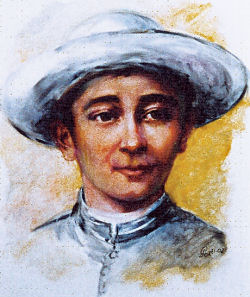
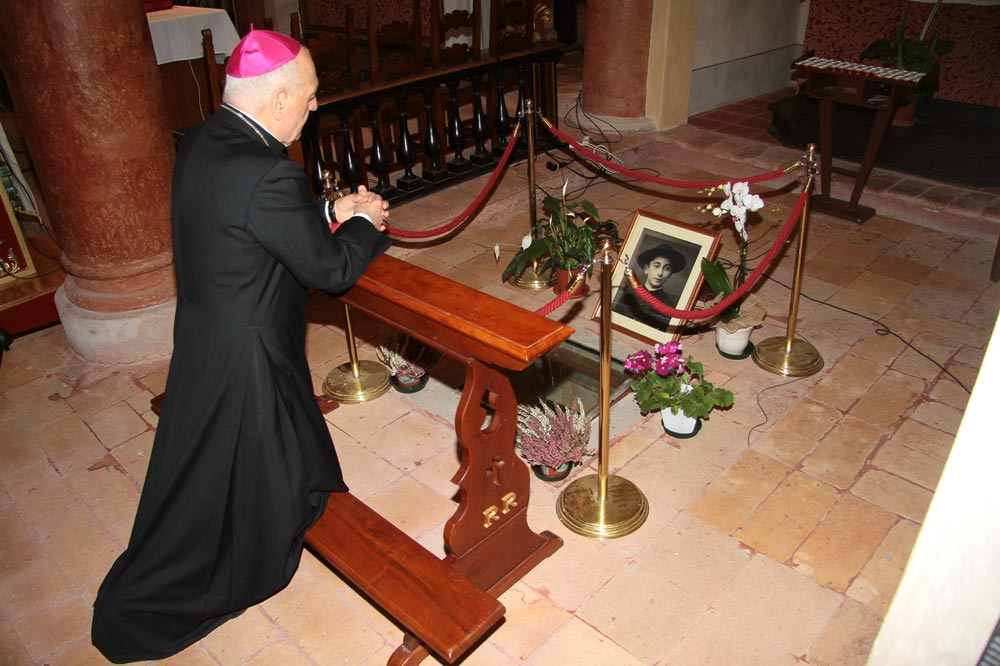
May 29: Blessed Rolando Rivi and the modern seminarian


So far, we have posted on the blog two articles which touched on the life and virtues of Blessed Rolando Rivi: one, which deals about his dedication to Christ, the other on his fidelity to the seminary life, which is found in his love for his cassock.


Now, after these two articles, we (modern seminarians) can ask ourselves: after seeing the life and virtues of the blessed martyr, what can he teach us today and how can we live out the same courage and bravery of Rolando in our present (less-dangerous, perhaps) age.

First, as we have said, Rolando is a model of dedication to Christ. Every seminarian knows that the seminary is a path of self-transformation in order to become an “alter Christus”. If we take seriously the formation we have willingly undertaken, we will find ourselves joyfully announcing to the world: “Io sono di Gesu” “we belong to Jesus”. And this belongingness to Christ must not be limited to words, but it should permeate every action and thought that we have as well. Eventually, this affinity to Jesus will help us generously offer ourselves to the Church whom we will love and serve as future priests.

Second, Rolando is the model of a faithful son of the Church. His fidelity to seminary formation, even to the smallest detail (the faithful wearing of his cassock), is a shining example that must be held before the eyes of every seminarian and priest. He may be young, but his example is a silent yet strong testimony for all of us. Whenever we find ourselves complaining of the seminary routine, or whenever we find seminary life monotonous, boring and useless, let us try to remember again the example of countless seminarians who have found happiness and sanctity in their formation. No matter where the seminary road may take us, let us take it as an opportunity to imbibe intense love for the Church.

Finally, Rolando is a shining example of sacrifice. Seminary formation is truly a life of sacrifice: the not-so-good atmosphere is constantly a challenge for us, especially for those who are accustomed to a good life. And when faced with the opportunity to sacrifice, we must not shrink from it nor embrace it with grudges: let us imitate our Lord and Blessed Rolando, who went to the altar of sacrifice, their Calvary with a smile on their face, with love in their hearts and with an intense love for the Church.
May Blessed Rolando inspire us to become more like Jesus everyday, so as to become good and faithful servants in the vineyard of the Lord!


O God,
merciful Father,
who chose the small 
to confound the powerful of the world,

we thank You for having given us, 
in the seminarian Rolando Rivi,
a testimony of total love
for Your Son, Jesusand the Church,
unto the sacrifice of his life.

Enlightened by this example, 
and through Rolando’s intercession,

we ask You to give us the strength 
to be always living signs of Your love in the world,

and we beg You to grant us the grace of [here state your petitions],
which we ardently desire.
Amen.


Tuesday, May 19, 2015

ESSAY TIME: LOVE AND SACRIFICE

(Author’s Note: The essay was made by the author, and the commentary [originally in a mix of English, Tagalog and Visayan] was made by a good friend of his, then edited-cum-translated by the author. Enjoy!)


“How much are we willing to give up for the ones we love?”

This question rings up in my ears whenever I hear someone talk of love and sacrifice. It is often that one of the best expressions of love is sacrifice, and that genuine sacrifice does not exist without love; but what are we to make of these lines, which are often clichés or (in Filipino context) “hugot lines”?
_________________________

A few months ago, we were asked by our English teacher to come up with an essay on ‘Love and Sacrifice’: hence, I made one, out of compliance. But because I failed in this attempt (I got 78 at this paper), I began reading the works of other brothers… I opened Besh Kuroyanagi’s locker and found his essay among his stacks of books, papers and biscuits… (I admit, Kuro-yan,  I stole some of your biscuits because of hunger… Will you then forgive me?)

I don’t know if Kuro-yan was sermonizing (again) or was just defending his “Mr. Hugot” title, but this piece made my day: it made good sense for me and for the others who probably have read his paper.

But little did I know that when these two are truly combined, it can make a hurtful yet meaningful experience for me… Because of these two, I can truly say to myself that I am not anymore indifferent to my own feelings… that I am now in touch with my human-ness.

Today, this essay of mine will do the opposite; it will use some excerpts of his essay as the base, and then I will begin sharing my own experiences as this piece unfolds. I hope it does justice to what Besh Kuro-yan has posted.

(By the way, I thank him for reading this paper, and I know he has the guts to translate this paper, if he wishes to publish it on his blog…. Besh naman oh!)
____________________

Today, we often find the word LOVE abused and misused. It has gone from its glory days to being a cheap word: it, being commodified and relativized, can be merely bought or talked upon by two conniving ruffians. A simple date in the restaurant, a night of hot sex in the hotel, or maybe just a simple chat and text by some devotee of cheesy lines may be interpreted by modern society as love. But sadly, lovers of this modern age think of their state today as a utopia, where authentic commitment, self-giving and sacrifice are non-existent. They would prefer to act wild and carefree rather than face the “consequences” of engaging into a commitment/covenant called love. Why?
_____________

Before, I knew the dangers of being in relationships of all sorts…. When we were still kids, our parents taught us to be wary of people who may use, abuse and distort us, and asked us to steer ourselves away from these kinds of people.

In high school, they particularly warned us not to enter into a romantic relationship: seeing my cousins getting pregnant out of wedlock, with their partners little or not responsible for them, made me cringe… I’d rather not marry!

And added to this sort of ‘fear’ was my earnest desire to become a priest: for me, priesthood was a better way to serve God and his people. I served him faithfully as a server, as a catechist, as a Christian for many years: why would I bother to find a woman and do normal stuff, when I can do better as a priest?
_____________________

It is because sacrifice has gone out of the equation. Sure, we are willing to give the time and the treasure; but all of these do not work without sacrifice. Sacrifice primarily deals with self- giving, as Saint Ignatius of Loyola would say; “to give and not to count the cost.... to toil and not to seek for rest, to labor yet not asking for any reward”. Sacrifice entails giving ourselves until we hurt.
____________________

When I entered the Seminary on 2012 (Author’s Note: with meee! *Kuro-yan*), I realized that the priesthood was not a bed of roses: the many activities, routines and endeavors that we pursued demanded our very selves: time, talent, treasure and trust. Even in the very first year of my formation, I realized that the demands of the priesthood were too much for any normal human being to carry alone, and so I had to rely on the gift and the grace of God to help me continue what I have undertaken.
As the school year ended, I (and the author) decided to take a very unique promise: that is, not to desire any other vocation (even priesthood), but to let the Will of God decide whatever vocation it may deem me worthy of. Even if it hurt my ego, I still took it and let it rip off….
And it has given me quite a fun adventure!
__________________

Why do we sacrifice? Why do we give? It is because we love that person. In loving them, we naturally tend to think of their good, even while disregarding our own good. For the lover, the good of the beloved, their love is good itself for him/her.

Even if the beloved does not notice our efforts, as long as he/she enjoys his/her freedom in being loved, everything is alright. In sacrifice, we find the fullest expression of our love, and in receiving the fruits of sacrifice, we acknowledge that we are truly loved by the lover who loves us.
___________________

And so it happened, that once upon a time, I fell in love. (It was still a part of that vocation-discerning plan I promised myself some time ago) Yes, despite the taboos and the seminary rules, I still got in love with someone. We spent a lot of time together; we shared a lot of things in common, even if I knew that she had someone else on her mind.
And so it happened that when everything was (almost) right, she decided to follow her heart and still love that other person. Ouch! That hurts! Even if she did not tell it to me directly, I already sensed it deep inside my mind.

I would like to tell her that it’s over: we must part ways.

And so, I decided to cut lines with her: for the good of herself, myself and of others who may be involved with the process.

I indeed learned that the best way to love was to give her what she wants- even if it is very painful for me to accept. It was too painful in reality, my dears. I still loved her, yes, but it seemed that if we will continue, it will be to the detriment of both of us. We still have our own dreams and challenges to face, and a bright future is still ahead of us.

I went through sleepless nights, boring days and moments where I wished I could turn back time and undo everything to stop these things from happening… But it gradually came upon me that everything happens for a reason: this was to cure my indifference to my own feelings and to the feelings of others. Life is not merely a ‘do-this-and-you-will-get-this” routine, but it is essentially a risk, a beautiful risk.

And, as I was rumbling through my papers last night to find my birth certificate (I was asked to continue my AB Philo in UIC by my parents… I was sent out of the Seminary last school year by Kuroyanagi’s grandfather.), I found this essay by my besh. I cried a lot when I read it, simply because from what I thought was mere “sermonizing”, was a real experience for me.
_________________

To fully understand and realize the unity of love and sacrifice, regardless of which comes first, let us go back to our opening question: “How much are we willing to give up for the ones we love?”. If we do not really give up something for the ones we are supposed to love, then our love will be just a show of words. If we constantly give up something without truly appreciating the ones we love, then it is all in vain.
_________________

Author: I would really like to place this quote from “Unlucky I’m In Love With My Bestfriend” (Oo na nga, he’s reading Wattpad, but he’s not a she ha!)… This quote definitely has something to say about my “sermonizing” and my friend’s experience

“LOVE involves SACRIFICE. It means sacrificing your own happiness to see your loved one happy.”

(Besh, bumasa ka na nga nitong Wattpad. This might help in recovery- Kuroyanagi)
__________________

In the bottom line of this discussion, we finally ask ourselves; why do we love? Why do we give? Answers and opinions may vary among each of us. But for me, it is because in being deeply in love that we see the face and the heart of God in someone else’s face, in someone else’s heart. And in seeing God-in-them, the God-within-us reaches out and tries gives itself in its fullness, so that there may develop an actualization of two persons becoming one in God’s gift called love. Love forms a community; it forms one mind, heart and being. Love is an entrance to greater communion, in which God, the lover and the beloved form an inseparable union.
____________________

And I guess, Mr. Hugot Kuroyanagi has a much better conclusion than I have, and so we will let him end this essay. This is my thoughts as well for this evening.

And I’m off to set another journey on my own: I’ll take up a good course in that school, and I’ll make sure I’ll visit Kuro-yan and his other friends in XACOSE…. (and make payback by bringing him his favorite biscuits! KING FLAKES pa more!)

I’ll continue seeking out the path the Lord calls me to: and as usual, I’m always ready and willing to dare to love. I'm not shying myself again from a responsibility and a gift: to love...Amen!
___________________________

Eventually, after all that has been shared and said in this essay, we are still left to reflect on the intertwined and bittersweet mysteries of love and sacrifice. Love is a mystery that constantly unfolds, and when it unfolds in us, we are then led into the path of fullness. Besides, the real understanding of love does not always come in essay form, but it is primarily understood in the context of our day-to-day actions. What is important for us today is that we are daring and willing enough to love.
________________________

PS- And I wonder, pala Besh Author, kemusta na lovelife mo? Wala pa rin ba?


(Author: Of course, wala pa nga! Langhiya ka!)